2D vs 3D animation: which is right for your project?
Ricky O'Donnell · Founder & CEO
What is the difference between 2D and 3D animation, and which should I choose?
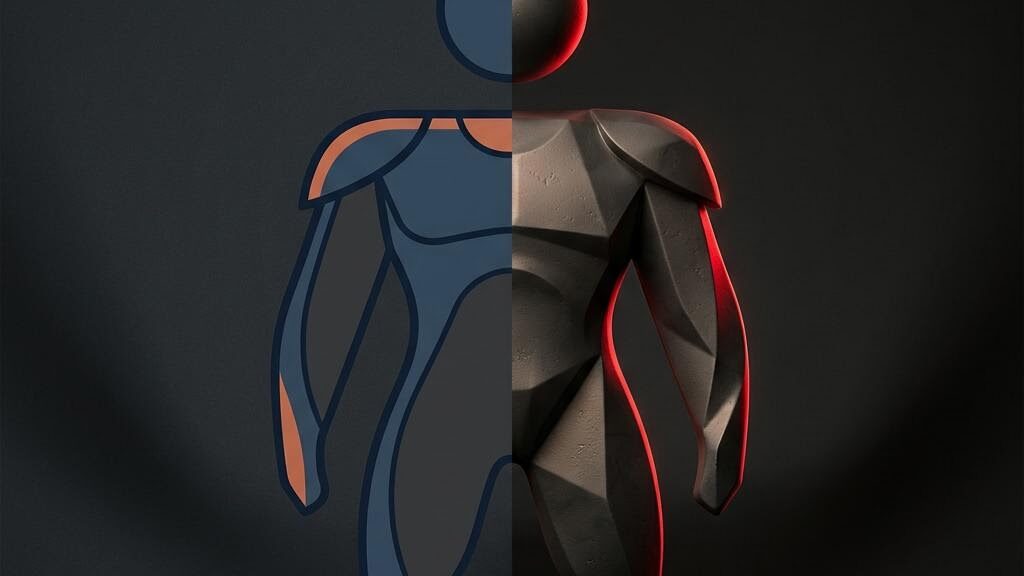
2D animation is flat, illustrated movement — fast to produce, stylistically flexible, and usually the more economical choice for explainers, training and brand content. 3D animation builds and lights actual models in space, which costs more up front but is unmatched for products, technical detail, and photoreal or cinematic work. The right choice depends on what the film has to do: clarify an idea (usually 2D) or show a physical thing convincingly (usually 3D).
"Should this be 2D or 3D?" is the most common question we get at the start of an animation brief — and it is the wrong first question. The right first question is what the film has to achieve. The style follows from that.
What 2D does best
2D animation — motion graphics, illustrated characters, animated typography — is the workhorse of business animation. It is faster to produce, easier to revise, and enormously flexible in style: it can match your brand exactly rather than approximating it. For explainer films, training content, process walkthroughs and anything built on ideas rather than objects, 2D is usually the better tool. Abstract concepts — data, risk, workflow, feelings — often communicate better as designed graphics than as rendered objects.
What 3D does best
3D animation builds real geometry, then lights and films it like a physical set. That up-front investment pays off when the subject is a physical thing: a product that doesn't exist yet, machinery you can't film, anatomy you can't photograph, an environment you want to move through. Once a 3D asset exists it can be reshot endlessly — new angles, new configurations, new campaigns — which is why 3D often wins on cost over a multi-year content programme even when it loses on the first film.
The cost difference, honestly
For equivalent lengths, 3D typically costs more than 2D — modelling, texturing, lighting and rendering are additional stages that 2D doesn't have. But the gap narrows with reuse. A 2D film is largely bespoke each time; a 3D model is an asset. In 25 years we have seen plenty of clients spend less over three years with 3D because the second and third films reused the world built for the first.
It is not either/or
Some of the strongest work mixes both: 3D product shots inside a 2D graphic language, or 2D data overlays on a 3D environment. Medical and technical films do this constantly — 3D for the anatomy or mechanism, 2D for the labels, stats and story around it. A studio that only offers one of the two will recommend the one it sells.
How we decide
At RJDM we scope the decision on four factors: subject (idea or object?), lifespan (one film or a programme?), brand (does an illustrated style or a photoreal one fit who you are?), and budget shape (one-off spend or asset-building?). We have been animating since 2006 within a studio founded in 2001, and the honest answer changes brief by brief. If a studio gives you a style before understanding the job, that is a red flag.